Wednesday, October 23, 2013

Don’t let Asian elephants be a part of our 6th mass extinction!


By: Elise Gilchrist

            Over the years I have met many a debate when I inevitably start spewing alarming facts and statistics about mankind’s impact on our world. This began when I became fascinated by extinction rates and how rapidly our planet was losing its species. The argument I always encountered from the opposition was that the Earth is resilient, loss of species is a natural occurrence, and ecosystems have adapted around the loss. “It’s just natural selection at work!” they would say.  Unfortunately that argument often rooted me upset and without rebuttal.
            Fueled by my intense interest in conservation and wildlife, I have since become better informed about the planet’s history of mass extinction. A mass extinction is defined as a relatively short geological time interval in which three-quarters or more of the Earth’s species went extinct. Since the beginning of life on Earth there have been five mass extinctions. The most famous of these is the most recent, occurring 65 million years ago that wiped out the last of the dinosaurs. Each one of these mass extinctions has been characterized by extremely widespread species loss and physical causes (i.e. giant meteors striking the planet).

An extinct wooly mammal, a species related to the elephants of today.

            So, how does this at all relate to my previous story of getting schooled in arguments about the environment? The answer lies in the theory that we are currently within or at the start of a sixth mass extinction!
 I will concede to my aforementioned opponents that extinction is natural and that the Earth has proven to be rather resilient. The background extinction rate, or the rate at which plants and animals have historically gone extinct, is estimated to be less than two species per million years (Barnosky et al. 2011). However, some current estimates put extinctions at two per hour. If I could go back in time, I would explain to my argumentative peers that previous extinctions occurred less frequently than they do today, and those in the past were also counteracted by speciation, the creation of new species. Unfortunately, this important balance has not been maintained in more recent history, and more species are going extinct than are forming.  
            But besides its accelerated rate, what makes this mass extinction different from the rest, besides the accelerated rate? The answer is human activity. All previous mass extinctions occurred from physical forces, whereas the one we are experiencing now is from a biotic cause. Diagnosis: Homo sapiens.
An Asian elephant, named Poonlarb, who lives here in the Golden Triangle of Thailand.

Even though the rates of extinction we are seeing today are alarming, only 1-2% of all species have gone extinct in recent times. This means that there is still a lot of biodiversity left to save if the global community is willing to make some changes. Think Elephants International (TEI) is currently working to save one of the species at the brink of extinction, the Asian elephant. By conducting research on this species in a controlled manner, the conservation community as a whole will be better equipped to mitigate the problems Asian elephants face today. TEI is also working to establish conservation education curriculums to better inform tomorrow’s government officials, community leaders, and consumers about how to best protect the biodiversity of the future. The question is, are you willing to help?

Barnosky, A. D. et al. (2011) Has the Earth’s sixth mass extinction already arrived? Nature 471, 51-57.

http://commons.wikimedia.org/wiki/File:Wooly_Mammoth-RBC.jpg


Tuesday, October 15, 2013

Elephant Artifacts: Vestigial Temporal Glands

By Lisa Barrett

Elephants have two specialized areas on their face called temporal glands. They lie on either side of the head between the eye the ear. From Sophie’s previous blog entry, we know that male elephants go into a state of musth (triggered by the presence of females) during which they secrete a pungent liquid from this gland. It is no surprise, then, that both African and Asian male elephants possess these glands. But why do female elephants also possess these glands?

 A male elephant in musth secretes a pungent liquid from his temporal gland.

First, what is a temporal gland? It is a multi-lobed sac that secretes a viscous, pungent liquid, and it is indicated by a small hole on the face. Male elephants release temporal grand secretions in great quantities, especially when they are excited or under stress. This suggests that the gland is under autonomic control.

Left: The temporal gland structures (modified from Shoshani J., 1992) and microscopic structure (x 40). Right: The location of the opening of the temporal gland.

You may recall that elephants sweat only around their toenails, because they do not possess sweat glands like we do. Interestingly, temporal glands serve as modified apocrine sweat glands. They produce an oily secretion containing cholesterol, phenol, and cresol when the animal is excited or anxious.

A temporal gland can weigh up to 3 kg in males, and it usually weighs no more than 1 kg in females. The glands may secrete throughout the year, but they become especially active in bulls during mating season. Ancient tradition claimed that there were pearls in the elephant’s skull, because the gland’s oozing fluid sometimes appears like crystals. The secretion was also considered to be an antidote for poison, an aphrodisiac, an antiseptic, and a tonic for hair growth!

Elephants in the wild have been observed rubbing their cheeks on trees and other objects in the forest, which suggests a more specific communicative function for the temporal gland secretion. The secretions may serve to mark important locations, like waterholes, or they may contribute to the spacing of the male population.

Elephants smell each others’ temporal glands as part of chemical communication.

While it is relatively well-known that female African elephants produce secretions when they excitedly reunite with members of other herds, the significance of temporal gland secretions in female Asian elephants is still a mystery. In fact, the temporal glands in female Asian elephants are nonsecretory and vestigial. Could they still serve as important signals to conspecifics? Taken together with observations of elephants rubbing their cheeks on trees, females’ production of important chemical information could have broader communicative implications for Asian elephants.


Sources:
Brown RE (1985) in Social Odours in Mammals, eds Brown RE , Macdonald DW (Oxford Univ Press, New York), Vol 1, pp 235–244.


Monday, October 7, 2013

Hitting the Mark: Target Training in Elephants

If you've ever trained a dog, you know that the training process requires infinite patience and heaps of concentration from both parties.  Even the most eager dogs need lots of guidance and lots of rewards to keep them interested in training.  Now, try to imagine training an eager and inexperienced dog that happens to be 100 times heavier, smarter, and stronger than your typical retriever.  Welcome to the world of elephant training! 

The training that is performed at the Golden Triangle Asian Elephant Foundation is essential to providing the elephants with a healthy lifestyle rather than a new form of entertainment.  In order to perform veterinary checkups and administer medical care, we need our elephants to present us with different areas of their bodies, and to stand still for prolonged periods of time.  To this end, the GTAEF constructed a training "wall," a large enclosure where our veterinary staff can work safely with the elephants.  Once an elephant has been fully trained, she can enter the wall and present any part of her body for inspection, including her ears, mouth, and feet.  But how do we train elephants to the point at which they are comfortable entering an unfamiliar area and receiving medical attention?  Target training!

For anyone who has trained animals, target training should sound familiar.  It is used to train animals from birds to orcas, and it is based on positive reinforcement and behavioral shaping.  The concept is simple: First, you create a "target" that your animal will learn to touch.  In most iterations of target training, this is a round object attached to a stick or pole.  The first step is to get your trainee to touch the target with the desired body part (typically the nose or snout).  Any contact with the target gets the animal a reward, and soon the animal should begin associating the target with rewards.  From there, you can begin shaping more complex behaviors.  In dogs, this can prove an effective way to train good walking behavior as well as many other fun tricks.  After teaching your dog to touch the target with her nose, you can walk with the target beside you, and your dog will follow with her nose right at the target. 

For our elephants, the vets use a long pole with a ball attached at the end as the target.  Each year the GTAEF is lucky to host Dr. Gerardo Martinez, a veterinarian and animal trainer from the Africam Safari in Mexico.  Dr Martinez has experience target training an incredible range of species, from hippos to tigers, elephants, manatees... the list goes on!  While he is here, Dr. Martinez helps GTAEF staff train any new elephants in the camp, and he also helps teach the mahouts how to work with their elephants using target training.  After completing the training, our full-time veterinarian Dr. Cherry and her assistant Gae continue and maintain the training throughout the year. 


Dr. Martinez working with Somjai at the wall

The first step in training is encouraging the elephants to enter the training wall area.  This is easier for some elephants than others--depending on their personalities; some elephants are eager to enter the training area, while others are a bit more dubious.  Over the course of hours or days, the elephants learn to associate the training area with positive reinforcement rewards:  big handfuls of sunflower seeds and lots of verbal praise.  Some elephants now try to enter the training area when they are simply passing by, looking for some easy sunflower seed snacks!

Once the elephants willingly enter the training area, they can begin target training.  The vets will touch one area of the elephant and verbally request the elephant to present it at the wall.  There are special areas of the wall customized for presentation of certain body parts: windows where feet can be presented or where the vet can safely look inside the elephant's mouth.  Every touch of the target gets the elephant a reward.  Eventually, the elephant learns to present the correct body area, like "side" or "leg," on verbal request.  

Thangmo presenting her leg to Dr. Cherry for inspection

One of the most important areas that target training allows our vets to inspect is the elephants' feet: captive elephants that don't receive proper veterinary care can be at risk for developing serious foot problems.  Some of the elephants that arrive at the GTAEF camp have broken nails, deep fissures, or other foot issues.  Dr. Cherry and veterinary technician Gae have continued our elephants' training and working with them at the wall.  By training them to show their feet to the veterinary staff, these elephants can finally get the treatment that they need and start healing. 

Finally, we hope that this style of positive reinforcement training will eventually replace many aspects of the traditional training methods used with elephants.  For thousands of years, elephants have been trained through punishment and aversive behaviors.  However, by showing that elephants can quickly and willingly learn training through positive reinforcement, Dr. Martinez and the GTAEF are slowly changing the existing culture of elephant training.  By working alongside both elephants and their caretakers, we hope to slowly affect widespread and long-lasting change.


Monday, September 30, 2013

Can Elephants Get Embarrassed? Spindle Cells and Social Emotions


By Sophie Wasserman

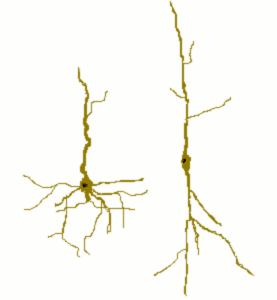
     At Think Elephants International, we talk a lot about the incredible cognitive capabilities of elephants, like their ability to recognize themselves in a mirror or understand cooperation, but a (relatively) recent neuroscientific discovery just might show us how elephants are capable of such complex social thought. In 2009, a team of researchers led by John Allman found von Economo Neurons (VENs) in the brains of African and Asian elephants. Named for the man who first discovered them in 1929, VENs are also called spindle neurons, because of their elongated spindle-shaped cell body. They are four times larger than the average brain cell and exhibit an atypical, elongated shape (see figure below).

Left: Typical pyramidal neuron in the brain
Right: von Economo neuron
via Wikimedia Commons


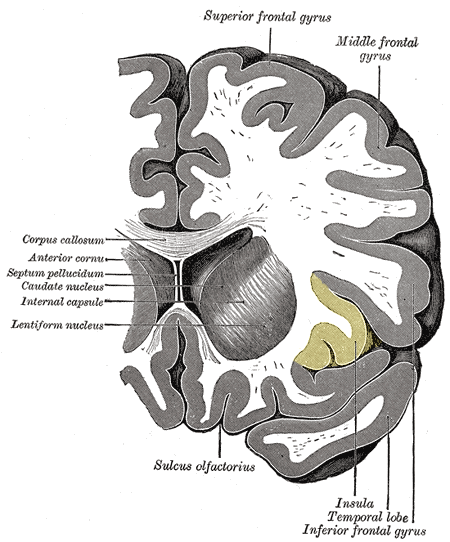
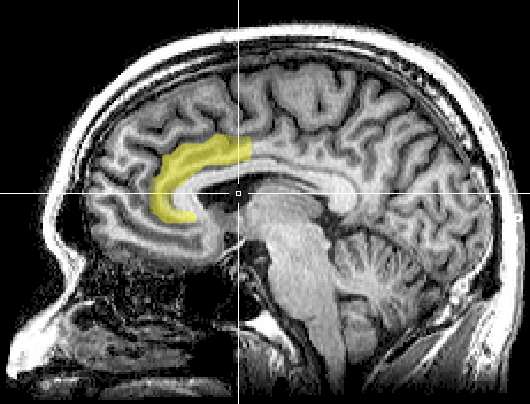
            So what’s the big deal? First, VENs are rare, once believed to only exist in the brains of humans and apes. But after testing hundreds of animals, researchers have shown that certain species of whales and dolphins, as well as elephants, also possess spindle cells. Second, and more importantly, spindle cells are found almost exclusively in the frontal insula (FI) and anterior cingulate cortex (ACC) (see figures below). These regions have a crucial role in generating social emotions like compassion, guilt, shame, or embarrassment, feelings that require an understanding of another person's opinion. The FI and ACC are also responsible for abilities like self-monitoring, perspective-taking, and even having a sense of humor. In other words, we use these regions when we try to interpret another person’s intentions, when we face a difficult moral dilemma, when we exhibit self-control, or when we recognize that we’ve made an error; in essence, the FI and ACC help us to gauge the emotions of those around us, and then enable these mood states to influence our own.

Frontal insula highlighted in yellow
via Wikimedia Commons

Anterior cingulate cortex highlighted in yellow
via Wikimedia Commons


         Allman’s working theory is that VENs are responsible for rapid adaptation to changing social contexts, because their large size allows them to transmit information faster than almost any other neuron. Like a link to our own mental mood ring, the spindle cells tell other areas of our brain how our friends es like we nsible forve  feel about us, saturating different parts of our cortex in a specific emotion and allowing for alterations in our behavior to suit the occasion. They could be the reason why we feel embarrassed by our parents, they probably allowed our ancestors to gauge who was trustworthy in battle, and they are a likely explanation for why elephants can understand the concept behind cooperation. Awareness of “other” is first dependent upon the distinction of “self,” and spindle cells facilitate the system by which we use input from the “other” to regulate the actions of the “self.”
            Supporting Allman’s theory, VENs in humans emerge mainly during the first three years after birth and become most active around the same age that toddlers start exhibiting mirror self-recognition and social emotions like guilt and shame. Studies of patients with autism, a spectrum of disorders characterized by a lack of social intuition, showed that the patients exhibited misaligned or abnormally located spindle cells. However, from this study alone, we cannot deduce which came first: social impairment or atypical VENs.

Toddler exploring a mirror; recognition of self
typically develops around 15-18 months of age
via Wikimedia Commons
            More compelling evidence supporting the role of VENs in self-awareness and social monitoring comes from the collaboration of Allman with William Seeley, a neurologist studying a neurodegenerative disease called frontotemporal dementia (FD). Patients with this disease lose social and emotional self-awareness, empathy for those around them, and “theory of mind,” or the ability to attribute a mental state (beliefs, opinions, knowledge and intent) to another individual. They become erratic, irresponsible, and insensitive. Upon closer examination, their brain damage occurred almost exclusively in their VENs. In fact, while up to 70% of the spindle cells in the FD patients’ ACCs were destroyed, the various other neurons that make up the ACC were largely untouched, pointing towards VENs as a crucial factor in the complex social processes lost when patients develop frontotemporal dementia.
Yellow box: spindle cell in the ACC of a healthy adult
via Wikimedia Commons
             However, larger cells like spindle cells could simply be a function of larger brains. In order to connect the increasingly distant parts of the cortex, bigger animals may have just developed faster, longer neurons. Research has shown that rock hyraxes and manatees, the elephant’s closest living relatives, do not have VENs, nor do monkeys, armadillos, sloths, or elephant shrews, but these animals all have smaller brains. Future clarification could come from studying the brains of giraffes or rhinos—animals with larger brains and bodies but not necessarily greater intellect. If the presence of spindle cells is not simply linked to an increase in size but is in fact only present in species with self-awareness like apes, dolphins, and elephants, then this is strong evidence that spindle cells play a central role in monitoring self and social influence.

Scientists need to examine other large animals, like giraffes,
 for the presence of VENs
via Wikimedia Commons

            So what does this mean for elephants? Possibly nothing besides the fact that they have massive brains with big neurons. Possibly, and more excitingly, it could mean that elephants may even be capable of more complex social emotions, feelings like shame, embarrassment or pride. These cross-species comparisons may have revealed a key piece of the cognitive puzzle.  Studying elephant intelligence and social cognition could be crucial to understanding a part of ourselves that makes us human -compassionate, cooperative and self-aware- and that maybe being “human” isn’t so unique after all.

Photo credit: Think Elephants International


Sources:
Chen, I. (2009, June). Brain cells for socializing. Smithsonian magazine

Hakeem, A. Y., Sherwood, C. C., Bonar, C. J., Butti, C., Hof, P. R., & Allman, J. M. (2009). Von Economo neurons in the elephant brain. The Anatomical Record, 292(2), 242-248.

Seeley, W. W., Carlin, D. A., Allman, J. M., Macedo, M. N., Bush, C., Miller, B. L., & DeArmond, S. J. (2006). Early frontotemporal dementia targets neurons unique to apes and humans. Annals of neurology, 60(6), 660-667.


Images:
Cartoon of dendritic tree of normal pyramidal cell and spindle cell by Selket via Wikimedia Commons

Insular cortex via Wikimedia Commons

Sagittal MRI slice with highlighting indicating the location of the anterior cingulate cortex by Geoff B Hall via Wikimedia Commons

Baby kissing mirror image by roseoftimothywoods via Wikimedia Commons

Very high magnification micrograph of the spindle neurons of the cingulate, LB-HFE stain by Nephron via Wikimedia Commons

Giraffe at the Monarto Zoo by John Goodridge via Wikimedia Commons


Tuesday, September 24, 2013

TEI's Education Program: Unity in Diversity

by Preeyanoot Surinkaew


When I started as a member of the Think Elephants International (TEI) team, I asked myself, “What kind of education program would best promote TEI’s aim?”  Our goal is to discover how we can best help conserve the dwindling populations of African and Asian elephants. TEI tries to do this by following a two-pronged approach:

·         First, we promote further scientific research on elephant intelligence and allow for a better understanding of how we can help the species.
·         Second, we educate each new generation on topics including animal behavior and environmental conservation.

I do not have much background about elephants or science. I graduated with a Bachelors degree in Elementary School Education in 1996. Besides working as a teacher in a primary school, I put my knowledge about child development into practice through activities with children in my village near Chiang Saen, Chiang Rai, in northern Thailand. During my time running this program, I developed many relationships with a network of teachers and friends who gave me opportunities to extend my experiences and knowledge.

As part of our Earthwatch program, we teach English to children in Chiang Saen. 

Through my experience with the children in my village, I also discovered the impact of modernization, which has led to present-day complexities and fragmentation of knowledge. In other words, the children in my village were learning a certain subject in order to perform well rather than because of their curiosity. I also feel that Buddhism is the root of Thai culture, and that we can use its value to engage society. For this reason, I decided to further my education by attaining a Masters degree in Buddhist Studies at Chiang Mai University and to enroll at the Sophia University Institute in Florence, Italy, where I got Masters Degree in Principles and Perspectives of a Culture of Unity (Politics).

The experiences and knowledge I gained have enriched and widened my perspective about the world. I have come to understand that education plays a very important role as a solution for the fragmented way of thinking encouraged in Thai schools. We must spread education as it relates to Thailand and its people, especially the degeneration of natural space. It is critical that we have a dialogue between people of many diverse perspectives—including those with scientific backgrounds as well as those with real-world experiences—to unite for this cause. 

At TEI, diverse people meet and share their knowledge to help reach our shared goal of educating Thai children about elephant conservation and research. We come from different countries, different backgrounds, and different cultures. We share and reciprocate thoughts, questions, and inspirations that provoke one another during lab meetings. Through the shared interest in conserving elephants, we learn about the essence of living: cooperation and interrelation. This can also be related to the common roots of Thai and Asian cultures. Our work helps us to integrate actual socioeconomic and environmental issues to help us improve the scientific skills of future generations.

The TEI team brings together people with very different backgrounds. 

I have found that the elephant-sized impact we are making comes from our common experience as members of TEI and represents the perfect means toward achieving the goals for our education program.